Does aquaculture use more wild fish than it produces?
There is no single answer for all aquaculture. The relationship between wild-fish inputs and farmed-fish production varies by species, life stage, feed formulation, feed efficiency and the method used to make the calculation.
Fishmeal and fish oil are important sources of nutrients in many aquaculture feeds. They may be produced from whole fish or from by-products generated when seafood is processed for human consumption. Their use differs between species and feeds and can also change during the production cycle.
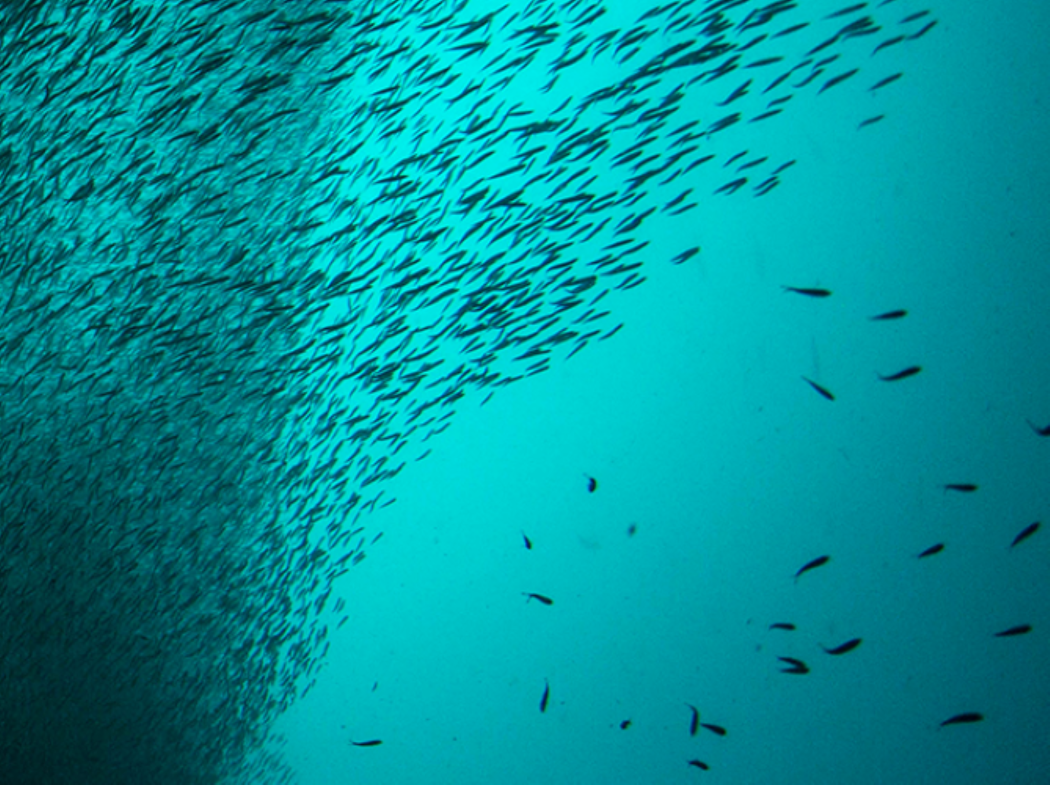
Marine ingredients
Using marine resources responsibly
Skretting works to use marine ingredients effectively while broadening the range of suitable ingredients available for aquaculture feed. Feed formulation considers the nutrients required by the species and life stage, the quality and source of the ingredients, and the intended use of the product.
Reducing the percentage of fishmeal or fish oil in a feed does not by itself demonstrate lower wild-fish use or better environmental performance. Feed efficiency, ingredient origins and the calculation method must also be considered.
Our marine-ingredient requirements consider available information on species, fishery and origin, the use of whole fish and by-products, traceability, certification and fishery improvement programmes. We report our use of marine ingredients and responsible-sourcing progress in the latest Impact Report.
MicroBalance®: an innovation in aquafeed production
Aquaculture production will need to more than double between now and 2050 to meet the demands of a growing population. At the same time, we need to reduce the pressure put on the planet’s resources. How can we grow sustainably? Basically, we need to produce more from less. That’s where MicroBalance® enters the scene.
Using technology that is based upon our latest understanding of essential micronutrients and how they interact with fish and shrimp, MicroBalance® allows us to replace one feed raw material with another without impacting performance, welfare or end-product quality.
Crucially, this innovation, which is the result of several years' research conducted by the Skretting Aquaculture Research Centre (ARC), enables us to produce feeds with much lower fishmeal content across several major species.
Frequent questions on feed ingredients
What ingredients are in our feed?
Aquaculture feeds contain essential nutrients that should be delivered in the right quantities to keep fish and shrimp growing well and healthily. These nutrients come from a variety of different sources. In addition to fish meal and fish oil, they often contain other vegetable-based meals and oils, fish trimmings and processed by-products from land animals.
Are the raw materials that we use in our feeds responsibly sourced?
Yes. At Skretting, we maintain that one of the most positive sustainability impacts that we can have is to ensure that we manufacture our feeds from responsibly sourced raw materials.
Are the animal by-products used in aquaculture feeds dangerous to human health?
No. The safety of animal by-products has been proven by numerous scientific studies. Utilising these raw materials that would otherwise go to waste also helps to dramatically reduce the amount of fish meal and fish oil used by the industry.
Do salmon and trout feeds contain colouring?
In the wild, the flesh of salmon and trout can be a red/pink colour, due to an antioxidant called astaxanthin. Astaxanthin is produced in natural waterways by algae, yeast and bacteria, all of which are in the food chain of salmonids. Astaxanthin is an essential nutrient for salmon. It is required to remain healthy and disease free.
Do feeds contain growth hormones or antibiotics?
No. Skretting feeds do not contain any growth-promoting hormones. In some markets, antibiotics are added to Skretting feed upon customer request and per veterinary prescription, in accordance with specific rules established by law.
Do feeds contain chemicals or preservatives dangerous to human health?
No. Aquaculture feeds are subject to strict checks to ensure that they do not pose any threat to human health. Any preservatives used must comply with laws and regulations governing their use.
What is ethoxyquin and is it safe?
Ethoxyquin is an antioxidant that protects and maintains the quality of the omega-3 fatty acids in fish meal, particularly during transport and storage.
What are fish meal and fish oil, and why are they used in aquaculture feeds?
Fish meal is a powder obtained after cooking, pressing, drying and milling fresh raw fish, while fish oil is a liquid pressed from the cooked fish. Both are produced from harvesting short-lived, fast-growing stocks of small, bony and oily fish for which there is little or no demand for human consumption.
How much wild fish is needed to feed farmed fish?
Skretting now has the knowledge and R&D to produce Atlantic salmon feeds requiring zero fish meal, and zero fish oil. We invest in R&D that provides full flexibility.
Do we use novel ingredients in our feeds?
Yes. Skretting is in full support of the development of novel ingredients and we have been using some of these in our diets with the support of those customers.