
What ingredients are in the recipe of our feeds?
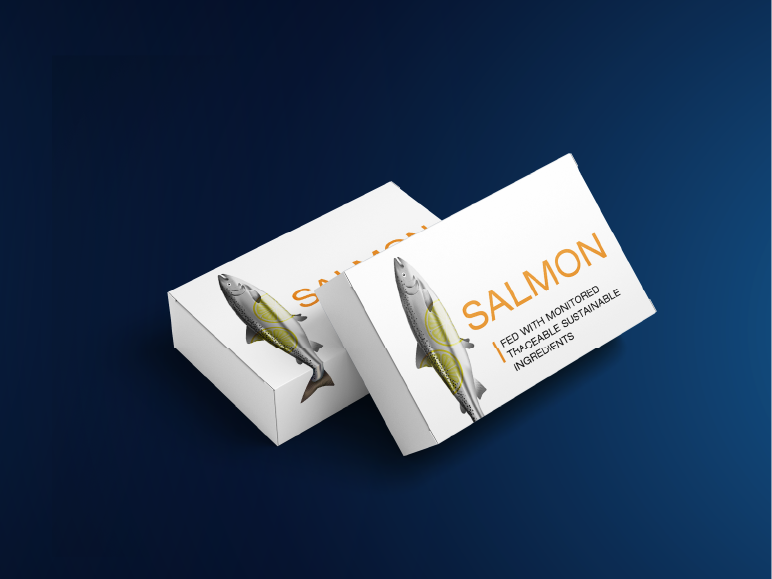
Due to specific nutritional needs, aquaculture feeds can contain many different ingredients of vegetable, marine and land animal origin. Some of the better-known inclusions can be fish meal and fish oil, wheat, soy, rapeseed meal, sunflower meal and faba beans. Something you might not know is that thanks to decades of R&D, Skretting can make feed for salmon without any fish ingredients at all. That’s due to the nutritional knowledge and expertise of our teams. Another surprising fact is that a single feed can contain up to 50 ingredients, all of which serve an essential purpose.
The ingredients that we use contribute essential nutrients like protein, energy, carbohydrates, fatty acids, vitamins and minerals to the finished feed, ensuring that the fish and shrimp receive a complete nutritional package.
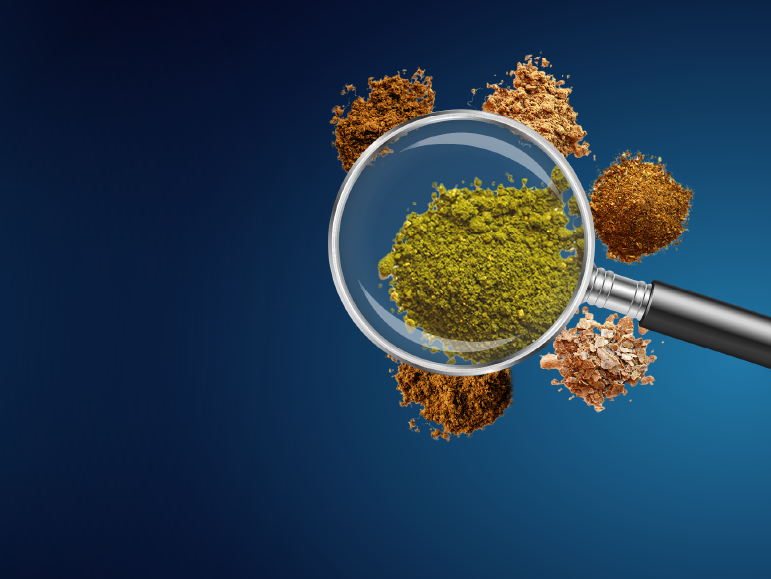
Everything that goes into aquafeeds needs to be taken into account and is especially important when considering the nutritional profile of aquafeeds, to ensure that no excess nutrients are included (which would really just be wasted). When it comes to closed aquaculture systems, where water is sometimes filtered and recirculated, this aspect is even more crucial.
To reduce dependence on certain very specific raw materials, we are constantly working on expanding our knowledge of ingredients and looking for new alternatives. Insects, algae and proteins produced by yeasts and bacteria are some of the latest developments.
We can be totally flexible with our formulas for fish and prawn diets thanks to the significant R+D carried out over decades. This expanded ingredient base in turn reduces volatility and risk for our customers.
Check out our sustainability report for the latest information on aquafeed ingredients, and read our series on ingredients here.
A common misconception about salmon feeds is that they are high in marine ingredients from wild fisheries. In fact, Skretting can produce salmon feed without any fish-based ingredients!

Next chapter
Let's cook!
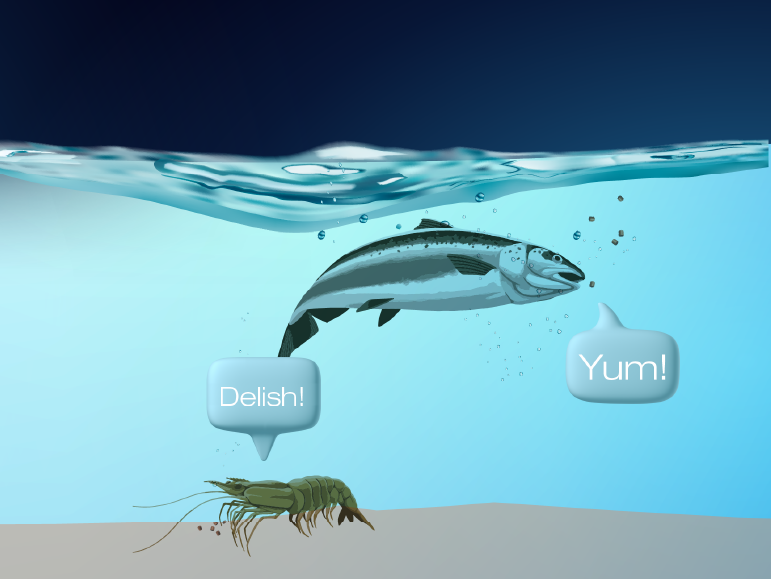
The food needs of fish and prawns are the same as those of people: well-balanced, nutritious and healthy food. In fact, we use much of the same equipment used to make our aquafeeds that are used to make human feed. The biggest difference? Our food has the added complexity of being submerged in water, which means it must be strong enough to adapt to the farm's feeding systems and at the same time be tasty for fish and prawns to want to eat. A difficult balance, but one that we mastered.