How are we contributing to feeding a growing global population?
Skretting delivers safe and sustainable feeds and services worldwide to fish and shrimp farmers to ensure the responsible production of healthy and delicious food. We are focused on reducing our environmental footprint and increasing our positive social impact.
As a global society, we are around 7.5 billion people heading towards 9.5 billion by 2050. Not only does this present the problem of an additional 2 billion mouths to feed, human diets are also increasingly shifting in line with growing prosperity. Consequently, the forecast that current global agriculture production needs to almost double by the midway point of this century makes long-term food and nutrient security one of the most pressing challenges that we face today.

Protein Farming for the Future
As the world's most efficient protein generator, aquaculture is one of the most important long-term growth areas for food production. According to the Food and Agriculture Organization of the United Nations (FAO), aquaculture continues to grow faster than any other major food sector and is expected to provide more than 60% of the fish available for human consumption by 2030.
Aquaculture is capable of producing large volumes of high-quality, healthy and rasterizable seafood. Compared to land-based livestock, the industry has a low carbon footprint and feed conversion ratio (FCR); It also has high protein and energy retention, and an edible yield harvested compared to other main food proteins. This makes it a solid model for how proteins should be grown in the future.
However, aquaculture cannot grow without sustainable food.
READ OUR LATEST SUSTAINABILITY REPORT
Our Purpose
Skretting's purpose is to 'Feed the Future', and we are committed to supporting the growth of the aquaculture industry as the world's population continues to grow. Skretting provides safe and sustainable food and services worldwide to fish and prawn farmers to ensure the responsible production of healthy and delicious fish and prawns. Aquaculture has enormous growth potential and already provides more than 50% of fish and seafood. Globally, Skretting contributed to the production of 21.5 million meals of fish and seafood every day in 2019.

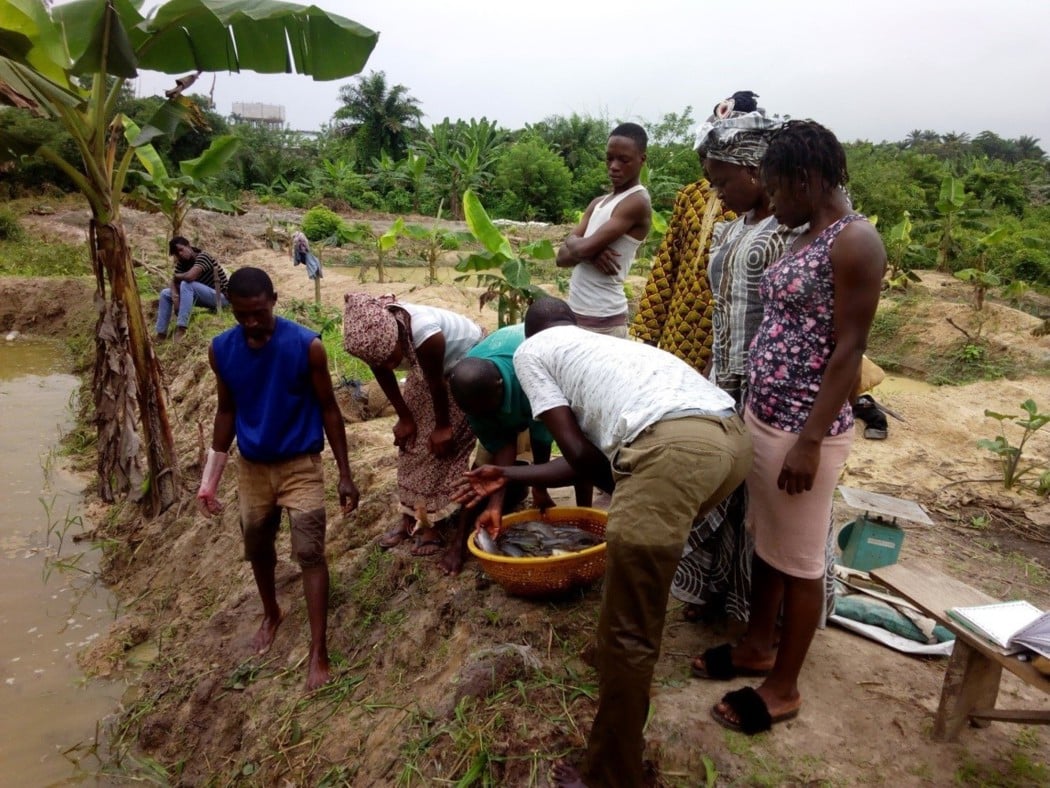
Growth in Africa
More than half of the world's population growth in the coming years is likely to occur in Africa. Skretting actively supports the growth of the aquaculture industry in Africa and is committed to ensuring that safe, high-quality and sustainable food and seafood is available to the world.
An example of how Skretting is actively contributing is through our community development projects in Nigeria and Zambia. These projects aim to empower smallholder farmers to manage productive and profitable farms in a sustainable way, through support and education in the early stages.
Sustainable ingredients
Consistent efforts by Skretting in R+D and constantly evolving ensure that we are also minimising our use of finite raw materials, such as fishmeal and fish oil. In fact, in 2017, Skretting launched a concept that proves that a salmon can be farmed from 1kg to harvest using zero fishmeal or fish oil.
The MicroBalance concept was launched in 2010 when Skretting was able to reduce fishmeal in our food for the first time without negatively affecting fish health and performance, and it remains critical to expanding our knowledge in other species.

Frequent questions on sustainability
Why is aquaculture important?
According to WWF, 85% of the world’s marine stocks are either fully exploited or overfished. Our planet’s population is forecast to reach 10 billion people by 2050, and with this growth will come a much greater demand for food, including seafood.
Are circular economy principles applied to aquaculture feeds?
Yes. Aquaculture feeds can use suitable by-products and side streams from seafood, agriculture and other food-production systems.
Is aquaculture sustainable?
Yes, when done properly. As a global society, we are around 7.5 billion people heading towards 10 billion by 2050. Not only does this present the problem of an additional 2 billion mouths to feed, human diets are also increasingly shifting in line with growing prosperity.
Are our feeds sustainable?
Skretting works to improve the environmental and social performance of its feeds through responsible sourcing requirements, supplier assessment, feed formulation, quality and safety controls, traceability, due diligence, the use of by-products, and continued research and innovation.
How is aquaculture regulated?
Aquaculture is regulated through requirements that can cover farm approval, animal health and welfare, environmental impacts, feed, food safety, traceability and the use of veterinary medicines. The applicable rules and level of oversight vary by country, species and production system.