How much feed is needed to grow a farmed fish?
Efficient protein
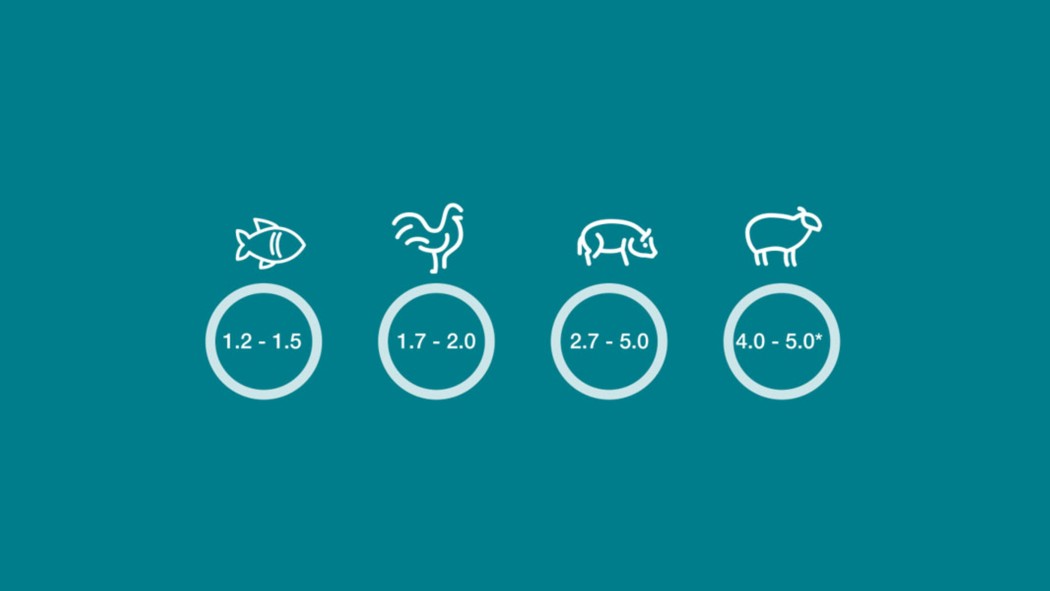
Fish are the most efficient animals to produce, as the feed conversion ratio (FCA) is very low. FCA is the amount of feed an animal needs to gain one kilogram of body weight.
Due to many years of research into specific nutritional requirements, Atlantic salmon is now the most efficient animal to produce, with the lowest FCA. Normally, Atlantic salmon need 1.15 kg of feed to gain 1 kg of body weight. Pigs need more than twice as much feed as salmon to gain 1 kg, while sheep need to eat almost six times as much.
Harvest yield
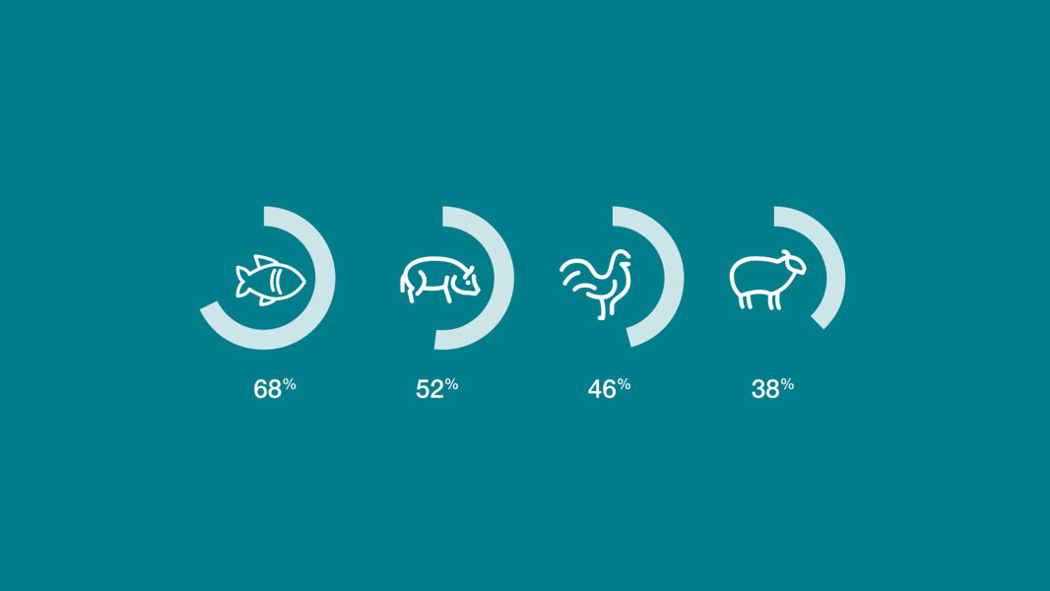
Fish also has a high harvest yield compared to other farm animals. Crop yield is the percentage of the animal that remains after the inedible parts are removed. For example, Atlantic salmon has a total yield of 68%. In comparison, chicken has a harvest yield of only 47%.
Frequent questions on feed management
Is one feed sufficient for all aquaculture species?
No. Fish and shrimp have different nutritional requirements depending on their species, life stage, health status and production conditions. Feeds are formulated for defined nutritional needs and intended uses rather than as one solution for every species or stage of production.
How much feed is needed to grow a farmed fish?
The amount of feed needed depends on the species, life stage, feed, health, farming conditions and feeding management. Feed conversion ratio, or FCR, describes the amount of feed used to produce one kilogram of weight gain. A lower FCR means that less feed is required.
Can efficient feed management help improve the sustainability of aquaculture?
Effective feed management can help producers use feed more efficiently, manage waste and support farm performance. Results depend on the species, feed, farming system, health, environment and feeding practices.