Skip to search Skip to main content

Our sustainability strategy

At Skretting, sustainability priorities shape how we work across sourcing, operations, innovation and collaboration. Our approach begins with requirements for responsible sourcing and includes animal health, farm productivity, climate action and our responsibilities towards employees, communities and other stakeholders. We have identified two double-materiality topics that form the basis of Nutreco’s integrated strategy and, together with our other material impacts, shape our Roadmap 2030. The Roadmap sets out our sustainability approach, objectives and, where possible, measurable targets.

Learn about our governance

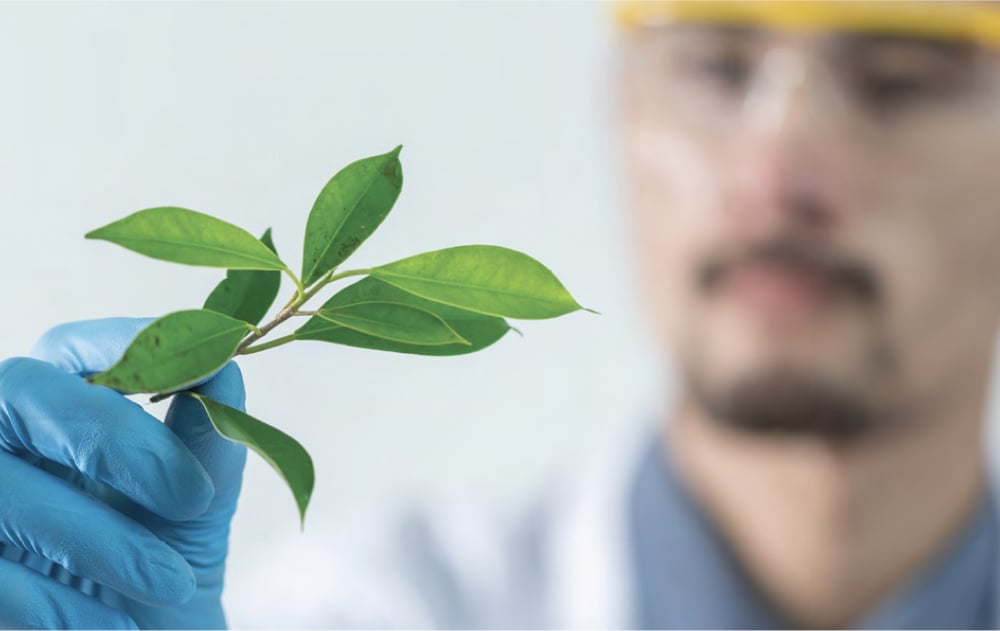
  • A man holding a branch
    Climate change mitigation
    We support Nutreco’s science-based greenhouse gas targets, developed in alignment with the goals of the Paris Agreement. We are also working to manage risks relating to natural resources, biodiversity and ecosystems in the supply chains for our feed ingredients. This includes sourcing requirements and measures addressing deforestation, land conversion, habitat loss and other identified environmental risks.

    Our approach:

    • Work towards Nutreco’s approved science-based targets for 2030.
    • Work with suppliers to improve the availability and quality of footprint data for the ingredients we use and identify opportunities to reduce associated greenhouse gas emissions.
    • Increase the use of renewable electricity where feasible.
    • Implement lifecycle assessment metrics in feed formulation, innovation processes and procurement.
    • Develop footprinting capabilities in farm and formulation models to help aquaculture producers assess feed-related greenhouse gas emissions and identify potential reduction measures.
    • Seek independent verification of core lifecycle assessment tools.
    • Connect lifecycle assessment metrics to internal data systems to support product and corporate footprint calculations.

    Some of our results:

    • We report reductions in Scope 1, 2 and 3 emissions against a 2018 baseline. Current percentages, reporting boundaries, period and methodology are provided in our latest Impact Report.
    • Skretting has removed coal from its own operations, as reported for the organisational scope and period covered by our latest Impact Report.
    • Skretting 360+ has supported improvements in feed conversion in documented applications in selected regions. Results vary by species, farm, baseline, period, services used and production conditions.
  • Occupational health and safety

    Our priority is to provide a healthy and safe working environment for employees and third parties working at our facilities. We work towards zero severe injuries and fatalities through defined procedures, training, risk management and continuous improvement.

    Our approach:

    • Implement systems to guarantee all new workers receive HSE induction when they start working
    • Benchmark and monitor different KPIs according to OSHA (Occupational health and Safety Administration) standards
    • Continue with our audit processes and follow up on all non-conformities
    • Increase all our leaders’ awareness by implementing VFL (Visible felt leadership) programs in coming years
    • Investigate all HSE incidents in our facilities and any incidents that happen to our colleagues in third-party facilities

    Some of our results:

    • 97% completion rate on our ambitious plan to offer 8518 trainings sessions. This achievement underscores our unwavering commitment to continuous learning and development to enhance the skills and knowledge of our workforce
    • 71% HSE audit compliance gaps have also been addressed, leaving only 16 open findings

Driving change through ACT

Lead with action, build connections, and ensure transparency – that’s how the seafood value chain must work to bring food to tables worldwide. Skretting commits to it, practices it, and makes it simple – and profitable – for both suppliers and farmers to follow.  

Learn how we co-create change with ACT

Frequent questions on sustainability

Why is aquaculture important?

According to WWF, 85% of the world’s marine stocks are either fully exploited or overfished. Our planet’s population is forecast to reach 10 billion people by 2050, and with this growth will come a much greater demand for food, including seafood.

Learn more about the importance of aquaculture

Are circular economy principles applied to aquaculture feeds?

Yes. Aquaculture feeds can use suitable by-products and side streams from seafood, agriculture and other food-production systems.

Learn more about circularity

Is aquaculture sustainable?

Yes, when done properly.  As a global society, we are around 7.5 billion people heading towards 10 billion by 2050. Not only does this present the problem of an additional 2 billion mouths to feed, human diets are also increasingly shifting in line with growing prosperity. 

Why aquaculture is sustainable

Are our feeds sustainable?

Skretting works to improve the environmental and social performance of its feeds through responsible sourcing requirements, supplier assessment, feed formulation, quality and safety controls, traceability, due diligence, the use of by-products, and continued research and innovation.

Learn more about how Skretting feeds are sustainable

How is aquaculture regulated?

Aquaculture is regulated through requirements that can cover farm approval, animal health and welfare, environmental impacts, feed, food safety, traceability and the use of veterinary medicines. The applicable rules and level of oversight vary by country, species and production system.

Learn more about how aquaculture is controlled