How we work with transparency and trust
For us in Skretting, it's essential to increase the transparency and traceability of food production along the supply chain. Combining the latest technology and science with the dedication of our staff to produce the highest quality feed, we do our utmost to ensure that our business operations adhere to our own strict environmental guidelines. Nutrace® is Skretting’s unique, global feed-to-food quality and safety system. It ensures consistency throughout the production process, from raw materials to final feed solutions. Built on five strong pillars, Nutrace ensures that our customers and end consumers can have full confidence with regard to feeds in the farmed fish and shrimp value chain.
Nutrace: feed-to-food quality and safety
Nutrace is Skretting’s company-wide management programme for feed-to-food quality and safety. It brings together ingredient and supplier approval, production controls, finished-product release, traceability and follow-up across our operations. The programme is reviewed and updated as requirements, risks and operating practices evolve.
Quality and food safety certifications
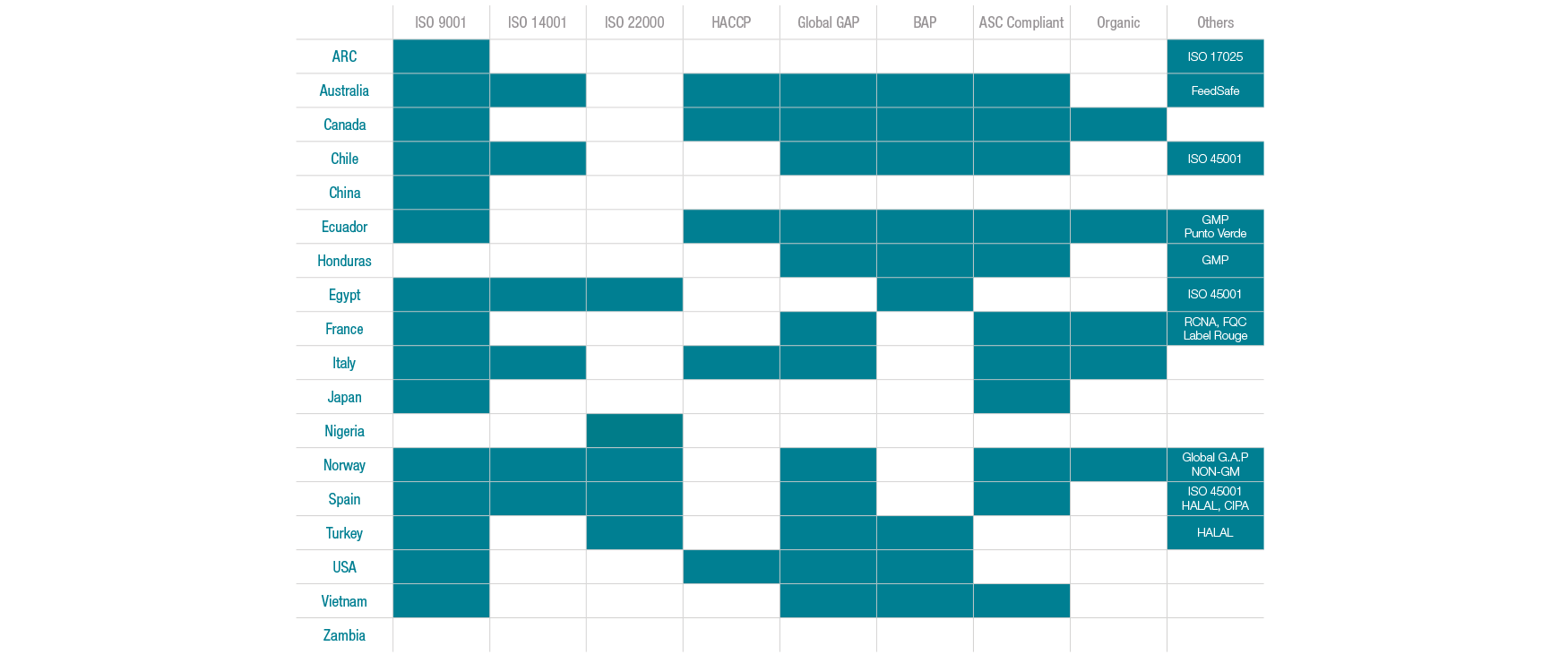
Skretting production sites may hold certifications to recognised quality and food safety standards, depending on the site, market and activities covered. These certifications provide independent verification within their defined scope.
Ingredient and supplier approval
Before use, raw materials and suppliers must complete an approval process based on the ingredient, source and intended use. The assessment covers relevant quality, safety, regulatory and traceability requirements. Environmental and social sourcing requirements are addressed through our responsible sourcing policies and supplier standards.
Approved ingredients and suppliers remain subject to risk-based monitoring. This can include document review, sampling, laboratory analysis, audits and investigation of irregularities. Findings may lead to additional evidence, corrective action, suspension or withdrawal of approval, depending on the circumstances and applicable procedure.
Continuous monitoring and improvement
Risk management and traceability
Nutrace includes procedures for managing food-safety incidents and other emergencies. Traceability systems connect feed batches with raw materials, production records and delivery information, supporting investigation and, where required, product withdrawal or recall. Skretting companies carry out training and testing to support timely decision-making and coordinated action.
Monitoring and follow-up
Approved ingredients, suppliers and production processes remain subject to risk-based monitoring. This can include document review, sampling, laboratory analysis, audits and investigation of irregularities. Where a potential non-conformity is identified, follow-up may include additional evidence, corrective action, suspension or withdrawal of approval, depending on the finding and applicable procedure.
Certifications and standards
About the certifications and standards
-
Skretting’s company-wide management programme that ensures feed-to-food quality and safety. All Skretting companies shall adhere to these standards.

-
ISO
Independent NGO working to bring together experts to share knowledge and develop voluntary, consensus-based, market relevant International standards supporting innovation and providing solutions to global challenges. -
GLOBALG.A.P.
Work with trained inspectors and auditors working for accredited certification bodies to perform independent third-party producer audits and issue certificates. -
ASC
Work with scientists, conservation groups, NGOs, aquaculture producers, seafood processors, retail and foodservice companies and consumers to recognise and reward responsible aquaculture. -
BAP
Trusted third-party aquaculture certification program. Work with improving the environmental, social and economic performance of the aquaculture supply chain and growing the global supply of responsibly farmed seafood. -
Naturland
Standards with holistic approach, sustainable management, nature conservation and climate protection in actual practice, preserving and maintaining the soil, air and water, as well as consumer protection. -
HALAL
The primary reason for Halal Certification is to serve the national and international Muslim communities in meeting their religious compliance. -
HACCP
Management system where food safety is addressed through the analysis and control of biological, chemical, and physical hazards from raw material production, procurement and handling, to manufacturing, distribution and consumption of the finished product. -
Label Rouge
Sign of quality assurance in France as defined by Law No. 2006-11. Products eligible for the Label Rouge are food items and non-food and unprocessed agricultural products such as flowers. -
GMP
Regulations requiring a quality approach to manufacturing, enabling companies to minimise or eliminate instances of contamination, mixups, and errors. -
OHSAS
OHSAS 1800:2007 Occupational Health and Safety Management Certification is an international standard providing a framework to identify, control and decrease the risks associated with health and safety within the workplace. -
FQC
Independent certification & training body established to help organisations achieve excellence and world class competitiveness through the application of various International Standards. -
FeedAssure®
Comprehensive feed safety management and certification program developed by ANAC for the Canadian feed industry in 1999. -
FeedSafe
The SFMCA operates FeedSafe® as the Quality Assurance Accreditation Program for the Australian stock feed industry. -
EU Organic regulations
The EU organic regulations lay down detailed rules on organic production and labelling of organic products.