What ingredients are in Skretting feeds?
Aquaculture feeds contain essential nutrients that should be delivered in the right quantities to keep fish and shrimp growing well and healthily. These nutrients come from a variety of different sources. In addition to fish meal and fish oil, they often contain other vegetable-based meals and oils, fish trimmings and processed by-products from land animals.
Skretting feeds can contain up to 50 ingredients to ensure a complete and balanced nutritional profile. These could include:
- Agricultural crops such as wheat gluten, corn gluten, soybean meal, soy protein concentrate, rapeseed meal, sunflower meal, lupin and faba bean
- Wild-capture fish and crustaceans for ingredients such as fish meal, crustacean meal and fish oil
- By-products from farmed land animals such as poultry meal, feather meal, blood meal and poultry oil
- By-products from wild-capture fish and crustaceans such as fish meal, crustacean meal
- By-products from farmed fish and crustaceans such as fish meal, crustacean meal, fish oil and salmon oil
- Novel ingredients such as insect meal and algal oil
- Micro-ingredients, including vitamin and mineral premix and pigment
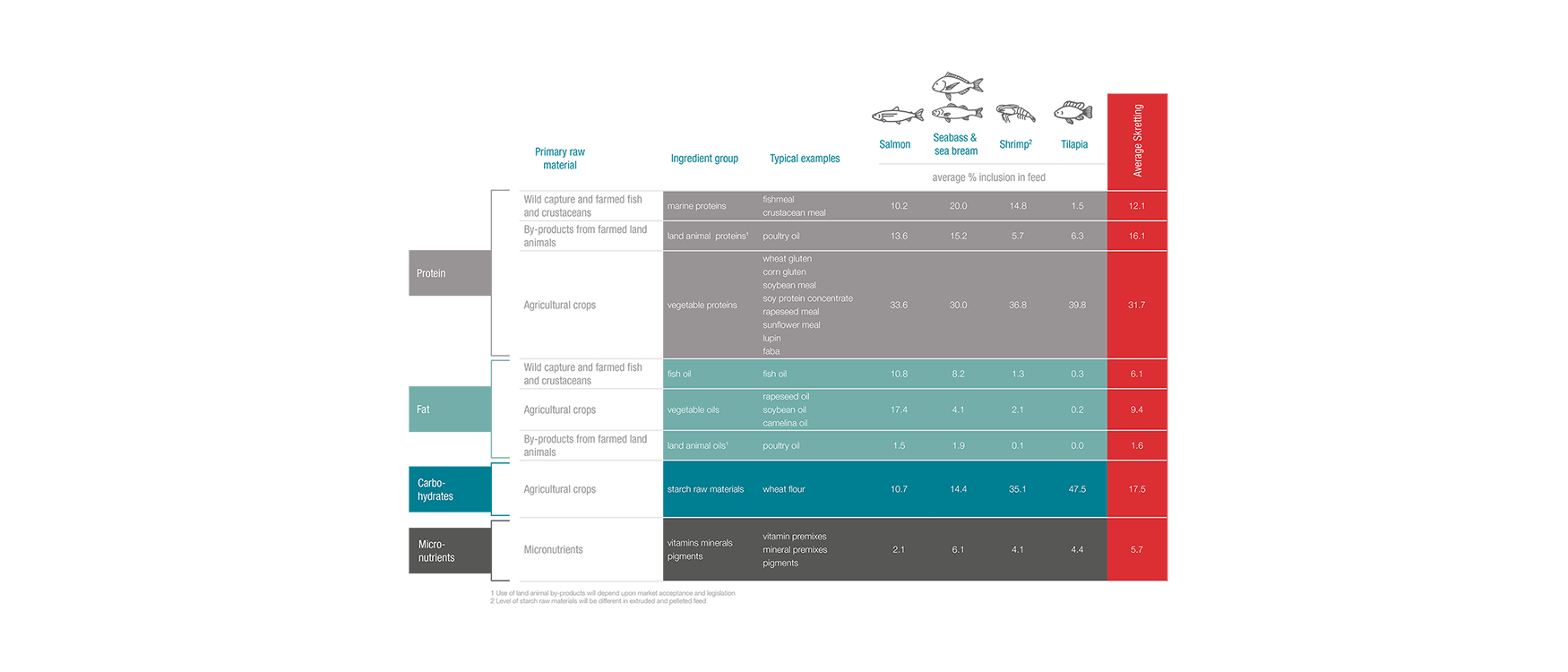
Ingredient sources
Depending on the product and market, aquaculture feeds may include:
- agricultural ingredients such as wheat, maize, soybean, rapeseed, sunflower, lupin and faba bean products;
- marine ingredients such as fishmeal, fish oil and crustacean meal;
- by-products from seafood processing;
- eligible processed animal proteins and fats;
- novel ingredients such as algal oils, insect ingredients, single-cell proteins or fungi-based ingredients; and
- micro-ingredients such as vitamins, minerals, amino acids and pigments.
Not every feed contains ingredients from every category. Ingredient availability, regulatory approval and product requirements differ between markets.
Marine ingredients
Fishmeal and fish oil provide protein, essential fatty acids, minerals and other nutrients used in some aquaculture feeds. They may be produced from whole fish or from by-products generated when seafood is processed for human consumption.
The proportion and source of marine ingredients vary between feeds, species and life stages. Our marine-ingredient requirements consider available information on species, fishery and origin, the use of whole fish and by-products, traceability, certification and fishery improvement programmes.
By-products and circular ingredients
Suitable by-products and side streams from seafood, agriculture and other food-production systems can provide useful nutrients and broaden the range of raw materials available for feed. Before use, these ingredients must meet applicable nutritional, quality, safety, regulatory and availability requirements.
Using a by-product does not by itself demonstrate a lower environmental footprint. Performance depends on factors including processing, allocation, transport, geography and the lifecycle methodology applied.

MicroBalance®: expanding formulation options
MicroBalance® is a formulation approach developed through Skretting’s research into micronutrients and how they support fish and shrimp nutrition. This knowledge helps formulators use a broader range of suitable raw materials while meeting the nutritional requirements of the species and life stage.
The ingredients used and the achievable inclusion levels vary by species, product, market and available raw materials. The complete formulation must continue to provide the nutrients required for its intended use.