Can efficient feed management help improve the sustainability of aquaculture?
Effective feed management can help producers use feed more efficiently, manage waste and support farm performance. Results depend on the species, feed, farming system, health, environment and feeding practices.
Feed management includes selecting an appropriate feed, storing and handling it correctly, monitoring appetite and growth, adjusting feeding to changing conditions and reviewing feed conversion and other farm data. Feed efficiency is an important indicator, but it does not by itself describe the full environmental performance of a production system.
Skretting 360+: The pinnacle of precision farming
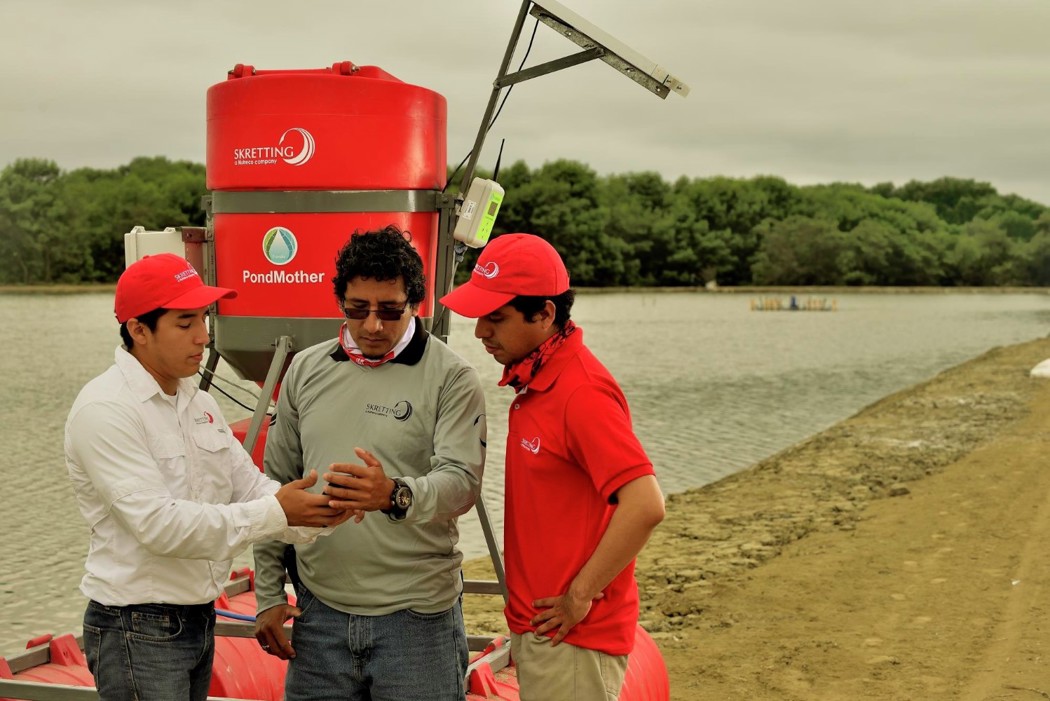
The most significant milestone in our digital journey is the introduction of Skretting 360+, an integrated platform that takes our digital offerings to the next level. Skretting 360+ combines innovative tools and services designed to optimise feeding, farming, and health management, offering proactive technical support to farmers worldwide. In Latin America, for instance, this platform has played a crucial role in digitalising shrimp farming.
Skretting 360+ is more than just a tool; it's a comprehensive ecosystem that offers a holistic view of farm operations. By gathering real-time data, it enables farmers to take preventive and proactive measures, maximising the value of their farms in a sustainable and profitable manner. From feed selection to stocking patterns, Skretting 360+ provides tailored recommendations that align with each farm’s unique production goals.

AquaSim
AquaSim is Skretting's modelling tool that allows farmers to forecast how fish and shrimp will perform in their surrounding conditions, with cost-benefit evaluations of different farming situations.
Frequent questions on feed management
Is one feed sufficient for all aquaculture species?
No. Fish and shrimp have different nutritional requirements depending on their species, life stage, health status and production conditions. Feeds are formulated for defined nutritional needs and intended uses rather than as one solution for every species or stage of production.
How much feed is needed to grow a farmed fish?
The amount of feed needed depends on the species, life stage, feed, health, farming conditions and feeding management. Feed conversion ratio, or FCR, describes the amount of feed used to produce one kilogram of weight gain. A lower FCR means that less feed is required.
Can efficient feed management help improve the sustainability of aquaculture?
Effective feed management can help producers use feed more efficiently, manage waste and support farm performance. Results depend on the species, feed, farming system, health, environment and feeding practices.