Impact report fish feed Skretting Norway 2025
All food production has a footprint, and we in Skretting work hard to do our part as sustainable as possible. To succeed in achieving our ESG targets and constantly get better in what we do, we need to measure. We also believe that we need to be transparent and share this data with our customers and the public. That is why Skretting Norway annually publish our footprint report with information of our impact on the environment.
38 % green house gas reduction for the feed since 2021
The production chains of the raw materials we use have the biggest impact on our footprint and the Skretting fed fish. For 2025, the carbon footprint (measured in kg CO2eq) for 1 kg of average feed was 38 percent lower than 2021.
Our baseline year for our SBTi commitment is currently 2018, but we are planning to update our SBTi targets according to the latest standards and requirements with a new baseline year likely to be either 2022 or 2025. The kg CO2eq/kg feed reduction from 2022 to 2025 is 17 percent. Feed is the major part of a salmon's carbon footprint, so any reduction we manage to achieve, especially in the feed raw material supply chain as the main feed footprint driver, will have impact on the footprint of salmon.
The main reasons for the substantial drop in greenhouse gas emissions are partly due to changes in the raw materials we use but especially linked to our efforts with suppliers. (See the section about emissions for more information).
From 2024 to 2025 the carbon footprint per kg feed slightly increased with 0.8 percent so that Skretting feed in 2025 had an emission factor of 1.43 kg CO2eq per kg feed. The total emissions increased by 7.6 percent while our production increased by 6.7 percent. Skretting Norway's absolute GHG emissions at factory gate were 960,811 tonnes CO2eq in 2025.
We have also worked purposefully with efficient resource and energy use for more than a decade, and our factories are today the best in class. In 2023 we transferred one of our boilers from natural gas to electricity. This reduced our scope 1 substantially, but our scope 2 increased more due to the emission factor of a market-based calculation of electricity in Norway vs. the emission factor for natural gas. From 2024 we decided to only use green electricity and started to purchase certificate of origin for all the electricity we use—in effect eliminating our scope 2 emissions. We continued doing this also in 2025. For more information and detailed GHG data go to the emissions page.
Certified and responsible fisheries—FFDR below 1 also in 2025
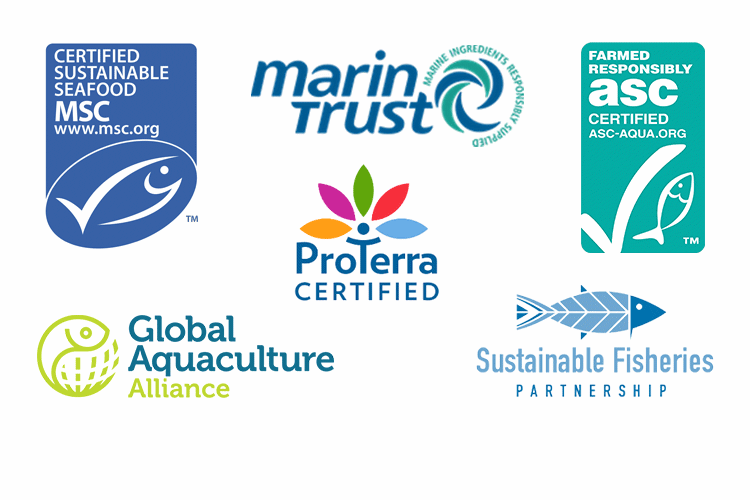
Skretting Norway only buys marine raw materials from whole fish that are certified or subject to a Fishery Improvement Project (FIP). All species and their origin can be found here, including information about the vegetable raw materials we use. Plus, other data that is important for our planet, people and animals.
The Forage Fish Dependency Ratio (FFDR) was again below 1 in 2025, with a FFDR for fish oil at 0.92 and 0.37 for fish meal. The trimmings proportion in fish meal and oil combined was 36.5 percent. The FiFo value for 2025 was 0.48.
For more information about the use of wild fish, certification, species and origin, go to the marine raw materials page.